
All-American Alien
Nostalgia, supremacy, and Fanonian meditations on third act fight scenes.

Author note: This can be read as a stand alone but is aided by the first essay in the series.
I wrote this a while ago. Long before recent geopolitical advancements (Minnesota and US-Israel-Iran to name a few)I sat on this because I wasn’t sure if it would still resonate.
That’s for you to decide now, not me…
Table of Contents
THE OLD WORLD
Pre-2019, the righteous escapism of the comic book superhero held serious water culturally. The proliferation of titles and expansion of singular films into cinematic universes seemed to be providing stories that audiences didn’t just want but were consuming voraciously.
One could, by age or willing suspension of disbelief, go on the one hundred and twenty minute ride and remain blissfully ignorant of the shortcomings. Scenes of rarely held nuance, conservative messaging, and American imperialism (to name a few) were ingested like inconspicuously sized pills, lubricated by copious amounts of CGI’d water.
The early half of the pandemic was dog-eared by the prevalence of streaming services, and from them arrived in-demand access to superhero narratives. The first (or limited) seasons of serialised television such as Invincible, WandaVision or Loki, encapsulated the peak of public interest before the decline.
‘Grief was love persevering.’ Omni-man was an identifiable manifestation of colonialism, and the box-office-to-bedroom dominance was met with open arms.
But the old world began to dematerialise. The pandemic opened the eyes of many to injustices and this created an increased demand for new dialogue. Every piece of revisited media was stained by the miseducation of the past. And with eyes primed for lack, audiences became less forgiving.
The chorus of lament regarding the superhero formula — from colour-grading to plot beats — became unavoidable.
This peri-fatigue ushered in the rise of The Boys, which beat out every Marvel television show to take the title of most watched superhero show of 2022. The arguments for the irrelevance of conventional superhero media got stronger and for some, whatever lustre they once had flattened to nostalgia. It was always clear to me that studios would not stop making superhero movies. Not when a quarter of the list of the top 20 highest grossing movies of all time are in the MCU.
In the absence of interest my curiosity grew towards what the future of the genre held. What would it take to win back the fatigued, other than time?
MORE THAN NOSTALGIA
When compared to Mickey 17, covered in the first part of this essay, Superman (2025) provides new territory for exploring the pre-and post-pandemic divide because it is the capital ‘S’ superhero film of the bunch. Awarded the title of the first superhero movie to be shown in IMAX post-pandemic, James Gun’s Superman was a litmus test for studios to gauge where audiences were and which narrative archetypes could be brought forward in the next generation of superhero media to ensure they made the largest return on their investments.
I’ve never had a storied investment in the IP or judging the successor to Cavill’s Superman, but I am still very vocal about my love for Skins. Nostalgia knotted itself around my neck like a school tie and pulled me into a screening. The concept of Nicholas Hoult’s Lex Luther as an ancestor of Tony Stonem’s delinquency charmed me into my seat. Imagine my surprise (and minor shame) when fifteen minutes in, I was genuinely invested in Gunn’s Superman.
Unlike Mickey, who stumbles upon heroism on his way to self-actualisation, Superman is your quintessential hero. His self-actualisation is concerned with his expression of heroism, instead of its presence because this is a given. In his tenth iteration, Superman is still an aspirational and stalwart character, representative of The Best of humanity. He is a superior man because he is not native to earth but because he selflessly contributes to its defense and stability.
An optimistic and humanist Superman isn’t new or provoking but Gunn leans heavily into Clark Kent’s most unique experience — that of an All-American Alien. The terms intensely oppose one another when considered in the context of the second Trump presidential term and the destructive inference produced by this juxtaposition grounds the movie in something real; something worth far more than nostalgia.
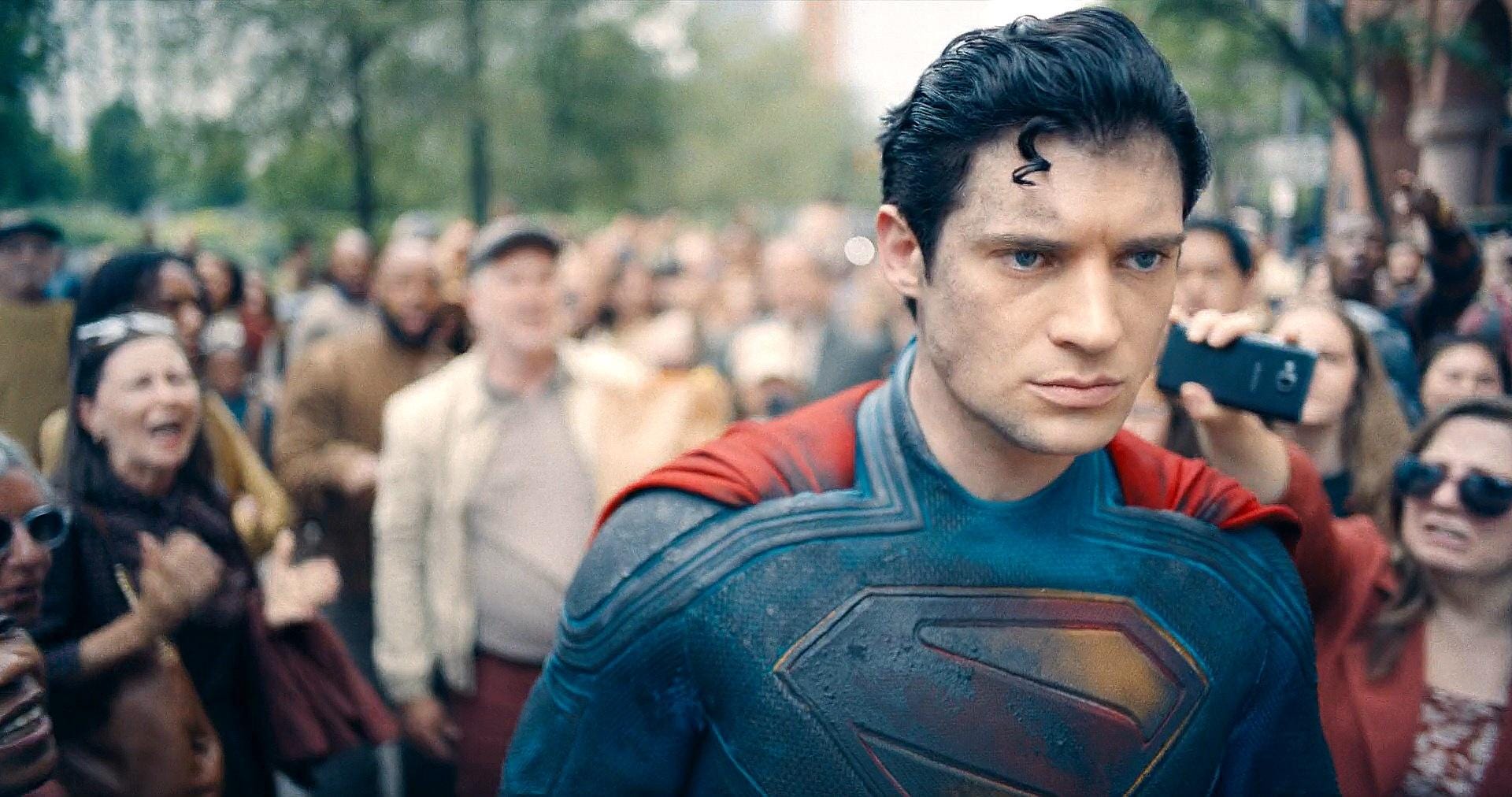
Despite full disclosure of his origins and intentions, Corenswet’s Superman appears on screen in the middle of his first defeat. He has been relocated to Earth after being disinherited from his land, history and people. He is depicted over and over again as a symbol of hope for all but the camera lingers on the disenfranchised and colonised, creating a strong association.
Even if the government harbours suspicions, the people do not. Superman saves women, men, and children of all races. He even saves their pets. And in doing so, he becomes a legend, embodying a fantasy of protection without discrimination. Power without prejudice.
Everyone, can you say, “Thank you white saviour?”
Thank you white saviour!
THE SUPREMACY IN SUPERMAN
When Lex Luthor recovers and translates his parent’s message, Superman’s first-act credibility disintegrates. The pentagon’s perspective shifts on his involvement in the Boravian conflict. His intervention and de-escalation, which was previously deemed “naive but well intentioned,” is now a full-blown threat to American security and because they are treated synonymously, all of humanity.
A question swirls in the ruffles of a red cape. When the super in superman no longer belongs to supremacy, should he be allowed to keep his power?
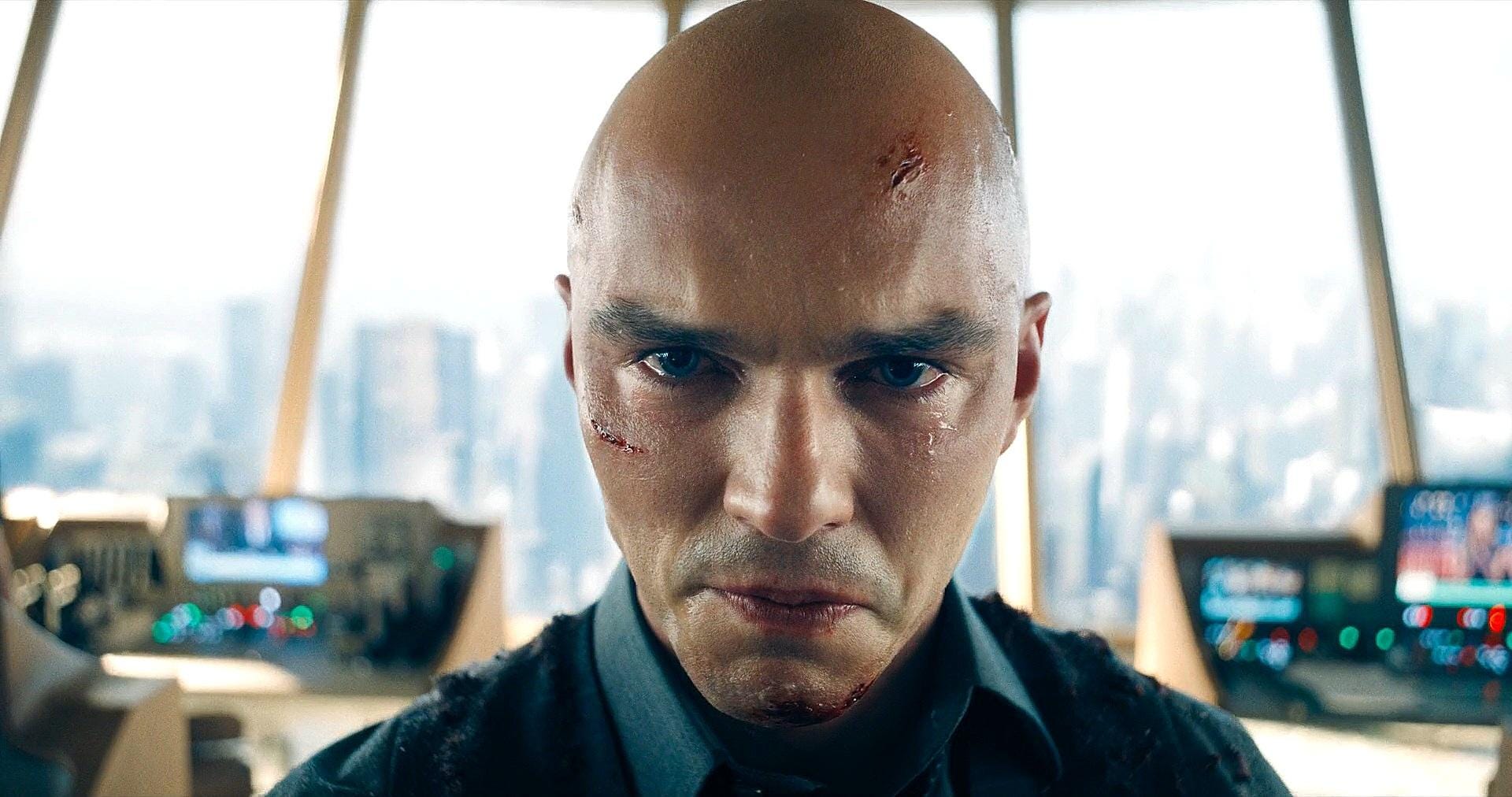
In lieu of this question, the transition from Superman to Khal-El serves as our answer. Clark is an alien, first and foremost. He is exposed and so condemned by the threat of his lineage. Khal-El’s highlighted similarities to humans no longer absolve him of his foreign heritage.
After being doggedly chased, Superman’s capture is what cements his immigrant-adjacent identity. In the scene where he is apprehended, Superman receives no Miranda Rights. He is seen to be trespassing on Earth, not just on American soil. A new reality is solidified: Superman is inhuman in the eyes of the state.
I point at the screen in a Leonardo Dicaprio-esque fashion because I recognise that guy.
And after said recognition, I realise this isn’t some new phenomenon. Fantasy and speculative fiction — especially written for and from a place of whiteness — mines from the Other, framing their experiences in white bodies to evoke empathy through vicarious discrimination at best, and to derive cathartic entertainment from it on the other days.
Connective threads between the depiction of Superman as a detainee and victims of ICE began to appear. During the film, I had to command my attention back to the story because I would get side tracked by stories of immigrant healthcare professionals in the UK and America. The same support staff labelled unskilled workers by the state despite risking their lives to preserve and protect public health.
I thought of people clapping in their front gardens at 8pm on a Thursday evening. I thought about the irony of Urooj Alavi, an ICU nurse who had to write an article for the ACLU to stop her husband from being deported by ICE whilst she actively treated COVID patients.
The similarities between Superman, who assumes a role of selfless dedication being met with bigotry and suspicion because of what his parents believe, and the oppressed write themselves.
Anchoring Superman’s fractal selfhood is the unshakeable ethical compass he attributes to both sets of his parents. Clark, as a civilian and journalist, has an investment in foreign affairs. Superman, as a Kryptonian hero settled on earth, has the means and power to do something about these affairs. It is a no brainer. This proactive problem-solving upholds the promise of Khal-El on earth, fulfilling his late parents’ wishes and making his adoptive parents proud.
However, Superman soon slides from seamlessly balancing his three personas to contending with the friction of what they mean to the powers at be. Once condemned, the triad of personas represent who he is seen to be, who he has to be, and who he is, but not respectively.
Where he was once able to rotate between them, using a costume and special glasses, he no longer has control because his inference in human affairs flattens his character into an irrefutable threat. Despite being adopted by a human couple and co-opting human morals and ideals, Clark’s birth parents and their departure from these morals and ideals strip him of his identity outside of having Kryptonian heritage. He is judged by his ancestry instead of his actions.
It follows that identity is a central theme of the film, overlapping with the geopolitical conflict, as both challenges (internal and external) are orchestrated for Superman by Lex Luthor.
On his de-escalation of the Boravian conflict, Clark says on record to Lois: “I wasn’t representing anybody except for me, and myself, and doing good.” From this we can determine that human life inherently holds more value to him than politics or international law. This is what he believes to be good, just, and moral. This is also what makes him alien.
Supplemented by his powers, Superman’s ethical compass is the site of his political danger. Existence in a body that presents as white and All-American bestows upon him a nationhood and representation that he cannot be easily stripped of, even when he others himself by not accepting it. The battle between Jarhanhpur and Boravia isn’t as simple as a Good vs Evil or Superman vs Lex Luthor issue, it is an America vs Other issue and so an issue of colonial power. If Superman doesn’t stand with America, attributing his power to colonial forces, he stands against it and with the colonized.
Before the conflict, Superman’s assimilation into the apex of its social and political hierarchy was a boon for the state. Every time he wins a battle in that cape and those boots, white American men are associated with his superpowered, virile image. When this is no longer the case, the privileges of his Whiteness and masculinity are ripped away in spite of his assimilation and position as a tax paying member of society, even if the physical attributes cannot be.
Privy to the same reality as the people he saves, Superman’s existence is criminalised overnight. He morphs from a squirrel-saving paragon of virtue into a harem-having intergalactic terrorist. And after American justice has been dealt, he falls from the minds of everyone but those who love him.
The state’s treatment of the Other under the guise of security is conjured by Lex’s treatment of Clark. He uses a network of resources to render Superman powerless. Destruction is bait. Civilians are cannon-fodder. The stability of reality is endangered to contain him in a pocket dimension prison with a judicial logic that mirrors the American carceral system.
When Lex seemingly loses the upper hand and the prison fails, he refuses to seal the rift created. Instead, Lex (acting as the embodiment of white supremacy and American imperialism he is) stands by as the kill count climbs to manipulate Superman’s attention. At his most aggrieved and tortured, our alien protagonist is imprisoned, sick, denied of sunlight, and looks like a Kryptonite-poisoned husk of the version of himself. The least human image of Superman is held in a cell — this (one hopes1) is by design.
Superman was once given a pass to be a saviour, but never to be a liberator. The effect of his white saviourism (in spite of his good intentions) follows usual patterns and is met with destruction.
THE SURVIVING TWIN PART II.
Though Superman’s doppelganger is not as central to the plot as Mickey17 or Sinners, on the surface, the revelation of Ultraman as Superman’s clone underscores the sustainable and deadly sin that powers Lex: envy.
His belief that Superman’s strength is physical and not his failure to be indoctrinated by American ideals of freedom and patriotism, brings him closer and closer to idolatry – albeit, a warped idolatry.
Born of battle scraps, Ultraman is a token of Luthor’s obsession. His presence throughout provides a pseudo-proximity to Clarke that his envy won’t otherwise allow. See trope in which an incapacitated but genetically identical copy of the superhero is created as a last-ditch effort to beat the unbeatable. A move that betrays the desperation and insecurity that belies any professed motive.
In his day-to-day fighting, Superman is leashed. Much like an oppressed person, Clark falls into the trap of having to prove he is not a threat to humanity, even as he is actively saving it. Harm reduction is a mode of survival as well as a moral imperative.
From a Fanion standpoint (which I wield lightly) Superman experiences his own versions of colonial alienation and double-consciousness. He is cut off from his heritage, existing (kara aside) as the only Kryptonian on earth, and when this heritage is suddenly deemed negative he experiences a split-identity; seeing himself not just as he is but as the national security threat Lex has always imagined him to be.
This awareness shapes his fighting logic, he does not kill and this refrain (as a being stronger and more powerful than those he protects) silently reinforces his humanity — that is, until Ultraman is unmasked.
Ultraman has the ability to internalise foundational systems of America (oppression, patriarchy, nationalism) and act upon them as an agent of the state. He performs the visual identity of superman but does not have his ethics or experiences. One could go as far as to argue that Ultraman is a physical manifestation of the epidermalization of inferiority process. Instead of internalising this inferiority (it is an action movie after all), Clark has to fight the version of himself shaped by the oppressor (Lex): a weapon of mass destruction to be programmed and stripped of all autonomy.
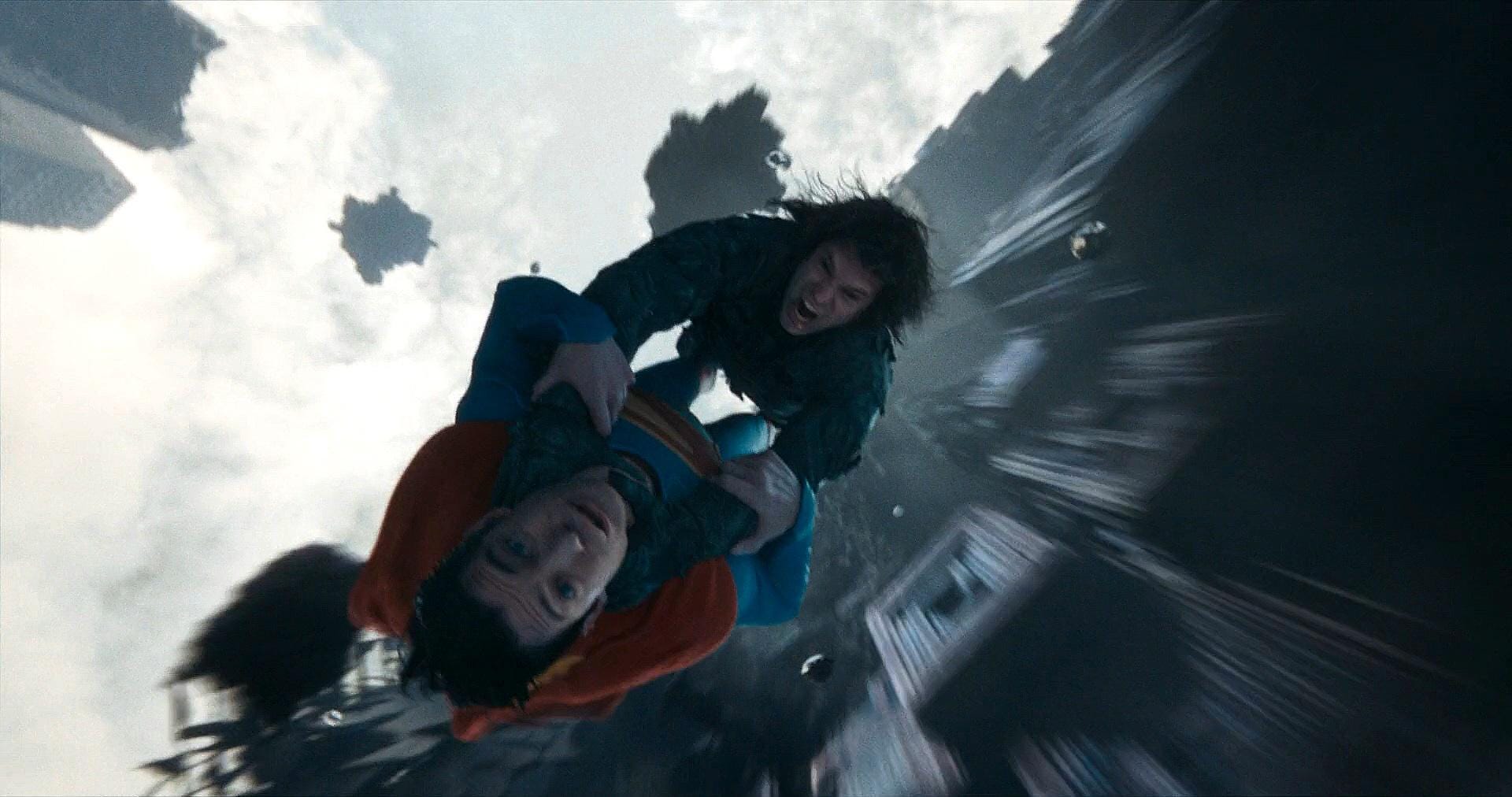
The reveal of Clark Kent’s face on Ultraman momentarily “displaces” Superman.
What is the difference between this face and my face, the difference between my punch and his punch? Intention? Purpose?
This too could be used as an example of atmospheric violence on screen. Whilst the city is cleaved apart, Clark’s attention is nailed to a fight against his doppelganger - exemplifying both Lex’s envy and oppressive force. He does not fight one man but a team of people being handsomely compensated to incentivise Ultraman’s success. This fight isn’t even the finale, it is a distraction from the finale; this battle of the self takes away from Superman’s primary goal: saving lives.
Maintaining the previously held argument that the relationship between a protagonist and their doppelganger is indicative of the emergence of post-pandemic identity, Ultraman signifies a version of Superman that exists within the realm of the imagination of others. In the context of Jor-El and his parents, this is the worst version of himself, the “Lord” and “Last son of Krypton.”
In keeping with the colonial allegory, Ultraman is a figment of colonial imagination and his death, as the only twin to die at the hands of the other, is imbued with meaning. When Ultraman is defeated, he is discarded into the rift to liberate Superman from the threat to his life alongside the figurative representation of his parent’s hopes and the public’s fears. Superman is not bested by colonial efforts to hijack his likeness. In the game of identity, he has chosen to protect humanity not because it is the Kryptonian thing to do but what he wants to do. Good triumphs over evil. He is self-actualised. Bla bla bla.
When viewing the dimensional rift created by the collapse of the pocket universe as a representation of a fracture in time, it can be argued that the rift is symbolic of COVID 19. The rift destroys lives, has a climbing kill count, and leaves the general public defenceless. It is exacerbated by the ignorance of those in power, who are aware but unwilling to act. The forced evacuation of New Troy leaves its streets empty and ghost-like, invoking imagery of the lockdown.
Because the rift is a threat orchestrated for the confrontation of Superman and his clone, it is also a point of no return, ushering in an identity for him that is not forged by obligation or legacy, but chosen and representative of his character. The rift, like Covid, creates lasting change and near irreversible damage. Ultraman, for all his possible embodiments, creates a wedge in Superman’s reality. The killing decision illuminates who Khal-El chooses to be and casts a shadow on who he was, as well as who he could’ve been.
AFTER THE RIFT CLOSES
If I’m to accept Superman as a representation of humanity and a tenuous stand-in for myself (as part of the audience), the stark contrast of before and after Covid is just as visible in his characterisation as the experiences of the oppressed. For myself and many others, the pandemic was a strange amalgamation of anxiety, grief, and political radicalisation. The stasis of the pandemic amplified the death of George Floyd and the responsive wave of the black lives matter movement.
For a blink-and-you’ll-miss-it-moment, lockdown provided an apt breeding ground for political thought. I rejected my woman-in-STEM identification (and the leery approach to the humanities that accompanies it) and spent that summer watching documentaries on the American prison system. I read essays by Crenshaw, Davis, Morrison, and hooks. I made frustratedly helpless Instagram posts highlighting the injustice of the world and its treatment of Black people.
I scrolled endlessly horrified by what I saw but loathed to do anything else. My only saving grace was that I wasn’t alone in my anger and misery, and whilst the world was on pause I indulged in what alternate versions of the future could look like after the rift closed.
There was no formal ending to the pandemic. Even the wide spread rollout of vaccinations didn’t close the door. COVID-19 cases continue to plague the population and lives are still jeopardised and ended by the illness. Almost overnight it seemed that Covid was forgotten and the future was underway.
I could not bring the version of myself that endured the pandemic with me into this world beyond the rift. She was too soft for it; furloughed and theory-bellied and sweetened by the realisation that writing held an inexpensive four letter difference from healing. She was too sensitive of the suffering of others and too fearful of her own and she refused to be distracted from either.
The end of the pandemic was marked by the collective choice to no longer participate in safety measures, bandaged in the glittery eagerness to return to what once was. To get back to Carnival and concerts, you had to block out the survival noise. Normal could only be earned by going against your better judgements to reclaim a life, any life.
I’m not saying this was Gunn’s intention but whilst marvelling at the experience of meeting characters on a screen in a cinema instead of at home, I watched the death of Superman’s twinned self and remarked on the death of self that the pandemic wrought. Collectively, we experienced the successive creation and destruction of our metaphysical doppelgangers like Superman. Knowing that only one version could emerge, we sacrificed a version of ourselves into the pandemic’s void.
And after employing whatever tools I had to return to a recognisable present, I am unable to rid myself of the memory of the past and too early on in the process to know if the sacrifice was worth something.
Comments on the anti-Israel or at least pro-Palestine sentiments found in the film have not given me certainty lol.
I am a huge fan of Superman and the metaphor he stands for as racialised Other despite his appearance — really appreciated this write up, and I can recognise your cynicism as necessary!